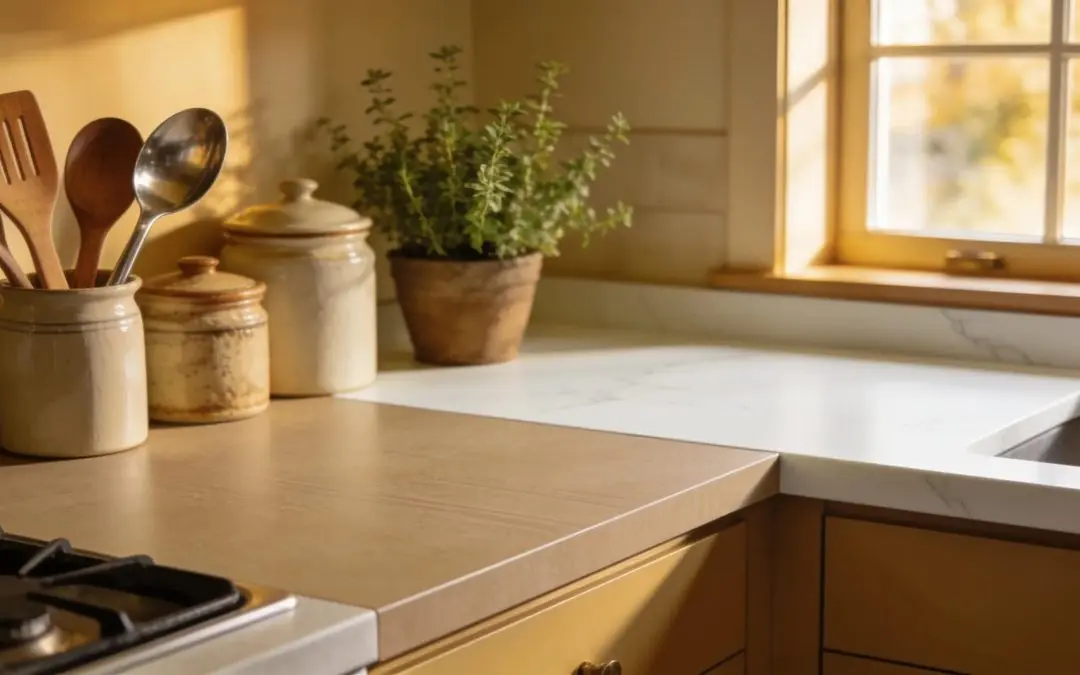
Choosing the right countertops affects both how your kitchen works and how it looks. For Savannah homeowners, understanding the differences between laminate and solid surface lets you weigh the pros and cons. This guide covers key features, costs, upkeep, and design options so you can make an informed choice and match your countertops to your cabinetry.
What Are the Key Differences Between Laminate and Solid Surface Countertops?
Laminate and solid surface differ in composition, toughness, and care. Laminate is made from layered synthetics, so it’s lightweight and budget-friendly. Solid surface blends acrylic and polyester into a non-porous, seamless sheet that mimics stone and stands up better to wear.
Comparison Table
| Material Type | Characteristic | Comparison |
|---|---|---|
| Laminate | Cost | Generally less expensive than solid surface |
| Solid Surface | Durability | More durable and resistant to scratches and stains |
| Laminate | Maintenance | Requires periodic sealing to maintain appearance |
| Solid Surface | Repairability | Can be easily repaired by sanding out scratches |
This table highlights the main traits that set the two materials apart. Use it to match the material to your daily needs and kitchen style.
How Do Costs Compare Between Laminate and Solid Surface Countertops in Savannah?
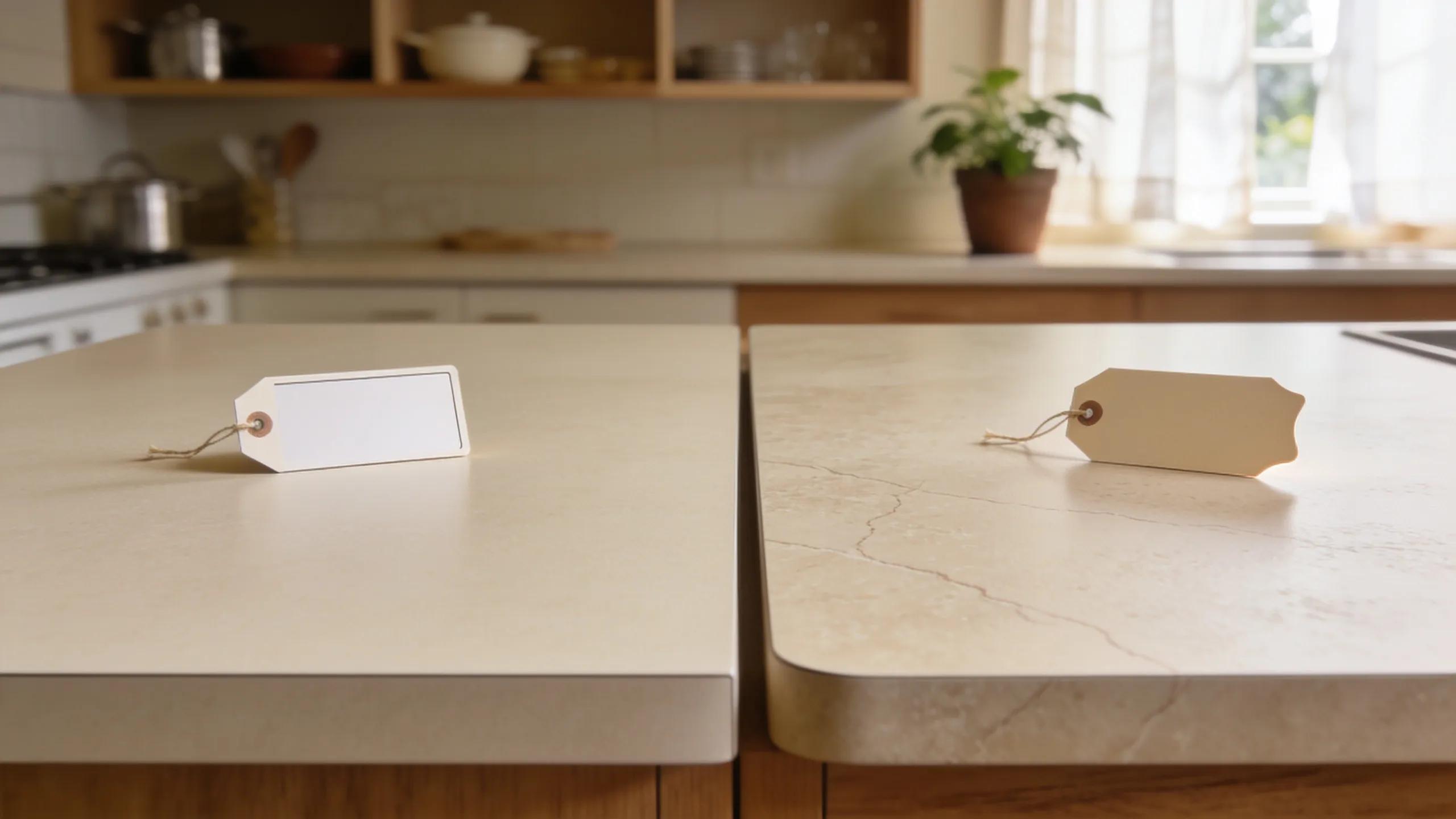
Prices vary by material and brand. Laminate tends to be the cheaper option, appealing to tight budgets. Solid surface costs more up front but can deliver better long-term value through durability and lower upkeep.
What Is the Typical Price Range for Laminate Countertops Locally?
In the Savannah area, laminate typically runs $10 to $50 per square foot, depending on type and brand. Local promotions can lower that cost, making laminate a practical pick for budget-focused homeowners.
How Does the Cost of Solid Surface Countertops Affect Long-Term Value?
Solid surface usually costs $50 to $100 per square foot, based on style and finish. Although the initial expense is higher, solid surfaces often last longer and need less maintenance, which can improve long-term value compared with laminate.
What Maintenance Is Required for Laminate Versus Solid Surface Countertops?
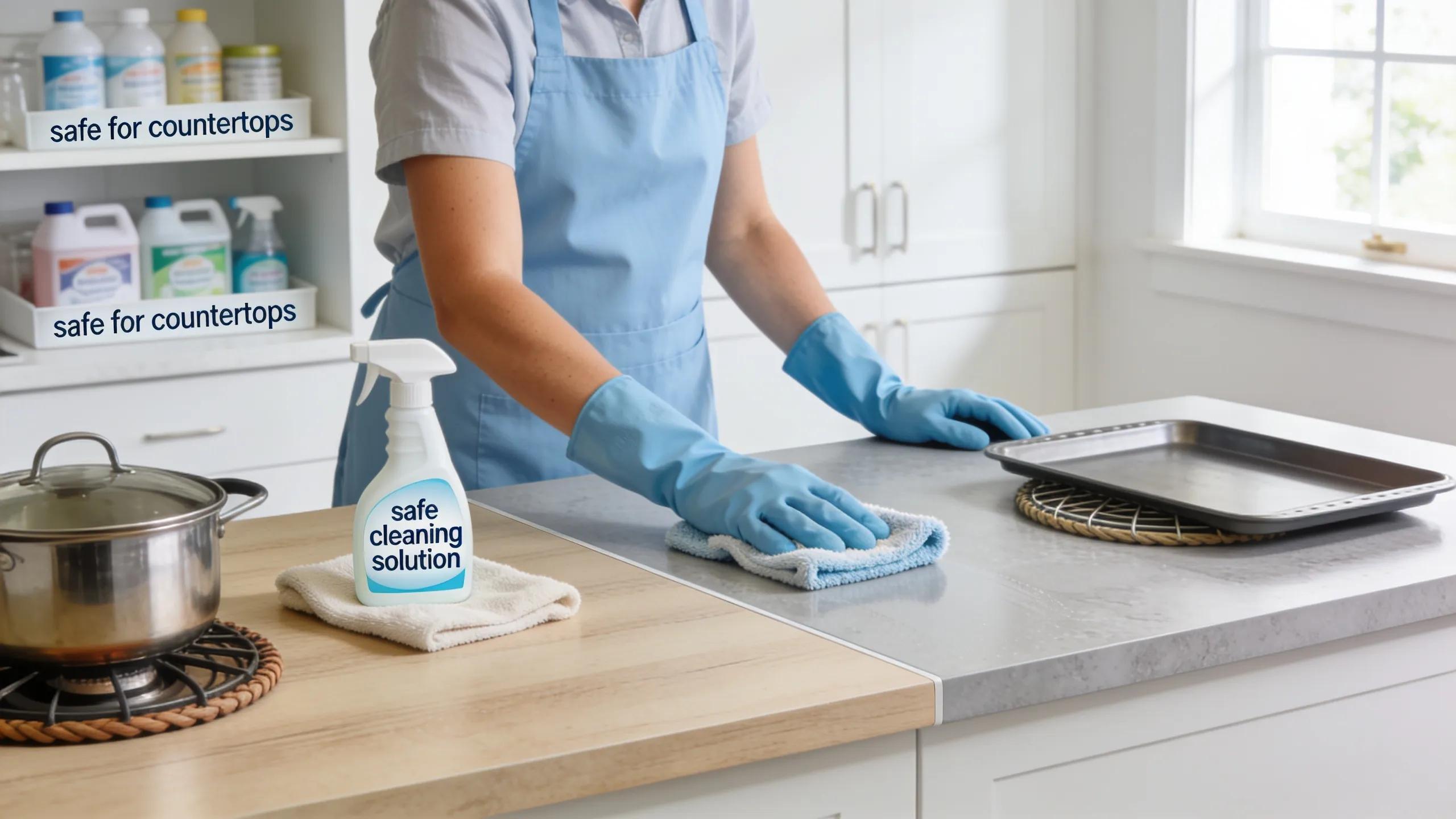
Both types need care, but the demands differ. Laminate can stain or scratch and benefits from proper cleaning and occasional sealing to preserve appearance. Solid surface requires no sealing and can be cleaned with standard household cleaners for easy upkeep.
Are Solid Surface Countertops Easier to Repair Than Laminate Options?
Yes. Scratches in solid surfaces can often be sanded out to restore the finish, while significant damage to laminate usually requires replacement. Repairability is worth considering, especially in busy kitchens.
What Maintenance Tips Should Savannah Homeowners Follow for Each Material?
Keep countertops in good shape with these practical tips:
- Cleaning Products: Use mild soap and water for daily cleaning; avoid harsh chemicals that can damage the surface.
- Avoid Heat: Always use trivets or pads under hot pans to prevent thermal damage, particularly with laminate.
- Regular Inspection: Check solid surfaces periodically for scratches or damage, and repair as necessary to maintain appearance.
Following these simple steps will extend your countertops’ life and keep them looking their best.
How Do Laminate and Solid Surface Countertops Complement Kitchen Cabinetry and Remodeling in Savannah?
Countertops should work with your cabinets to create a unified kitchen. Laminate comes in many colours and patterns, so it pairs well with a wide range of cabinetry styles. Solid surfaces offer a seamless, upscale look that complements higher-end cabinets and suits both modern and traditional designs.
What Design Options Do Laminate and Solid Surface Materials Offer for Kitchen Spaces?
Both materials deliver plenty of design flexibility. Laminate offers many patterns and colours, including wood- and stone-look finishes. Solid surfaces provide a sleeker, more customisable appearance with smooth seams for a refined finish. Choose according to your taste and kitchen theme.
How Can Homeowners Coordinate Countertop Selection with Cabinetry Choices?
Good kitchen design starts with coordinated countertop and cabinet choices. Consider the points below when making decisions:
- Color Coordination: Ensure the countertop complements the cabinets in both color and finish.
- Material Harmony: Combine materials that work well together, such as pairing modern solid surfaces with sleek cabinetry for a contemporary look.
- Style Consistency: Maintain a consistent style; for instance, rustic cabinetry pairs beautifully with textured laminate finishes for a cohesive aesthetic.
Matching countertops and cabinets creates a cohesive kitchen that improves both function and style.
Frequently Asked Questions
1. What are the environmental impacts of laminate vs. solid surface countertops?
Solid surface often has an environmental edge: many contain recycled content and are non-toxic. Laminate can include formaldehyde and other chemicals that may affect indoor air quality. Check certifications such as GreenGuard or FSC to confirm sustainability for either option.
2. How do laminate and solid surface countertops behave under heat?
Laminate is more vulnerable to heat and can warp or discolour without trivets. Solid surface resists heat better, but prolonged exposure should still be avoided. Use hot pads under cookware on both surfaces to protect them.
3. Can I install laminate or solid surface countertops myself?
DIY is possible for laminate since it’s lighter and more modular, but precision is needed for a seamless look. Solid surface installations generally require professionals because of precise cutting and bonding. Evaluate your skills and tools before attempting either.
4. How do the resale values of homes with laminate versus solid surface countertops compare?
Homes with solid surface countertops often see higher resale value, as buyers view them as more durable and upscale. Laminate can still be attractive, but it may not deliver the same value perception in higher-end remodels. Your countertop choice can influence resale potential.
5. What are the color and pattern options for each countertop type?
Laminate offers a wide range of designs, colours, and finishes, including realistic wood and stone looks. Solid surface provides customisable colours and patterns with a smoother, seamless finish. Consider your kitchen’s theme and the visual impact you want.
6. What is the lifespan of laminate versus solid surface countertops?
Laminate typically lasts about 10 to 15 years with proper care. Solid surface can last 20 years or more thanks to its durability and repairability. Longevity affects long-term investment, so weigh budget against expected lifespan.
7. Are there health concerns associated with laminate countertops?
Some laminates can emit volatile organic compounds (VOCs) from adhesives and finishes, which may affect indoor air. Look for low-VOC or no-VOC options if you’re concerned. Solid surfaces are generally free of those chemicals, but always check product certifications for assurance.